Trigger cappers UK

Trigger cappers UK for spray, pump and screw cap lines

Specify trigger cappers, trigger spray cap feeders, pump capping machines and screw capping routes with UK support from Lancing. Built for cleaning products, cosmetics, chemicals, home-care sprays and contract packing lines.

Machine range

Trigger, pump and screw capping machinery

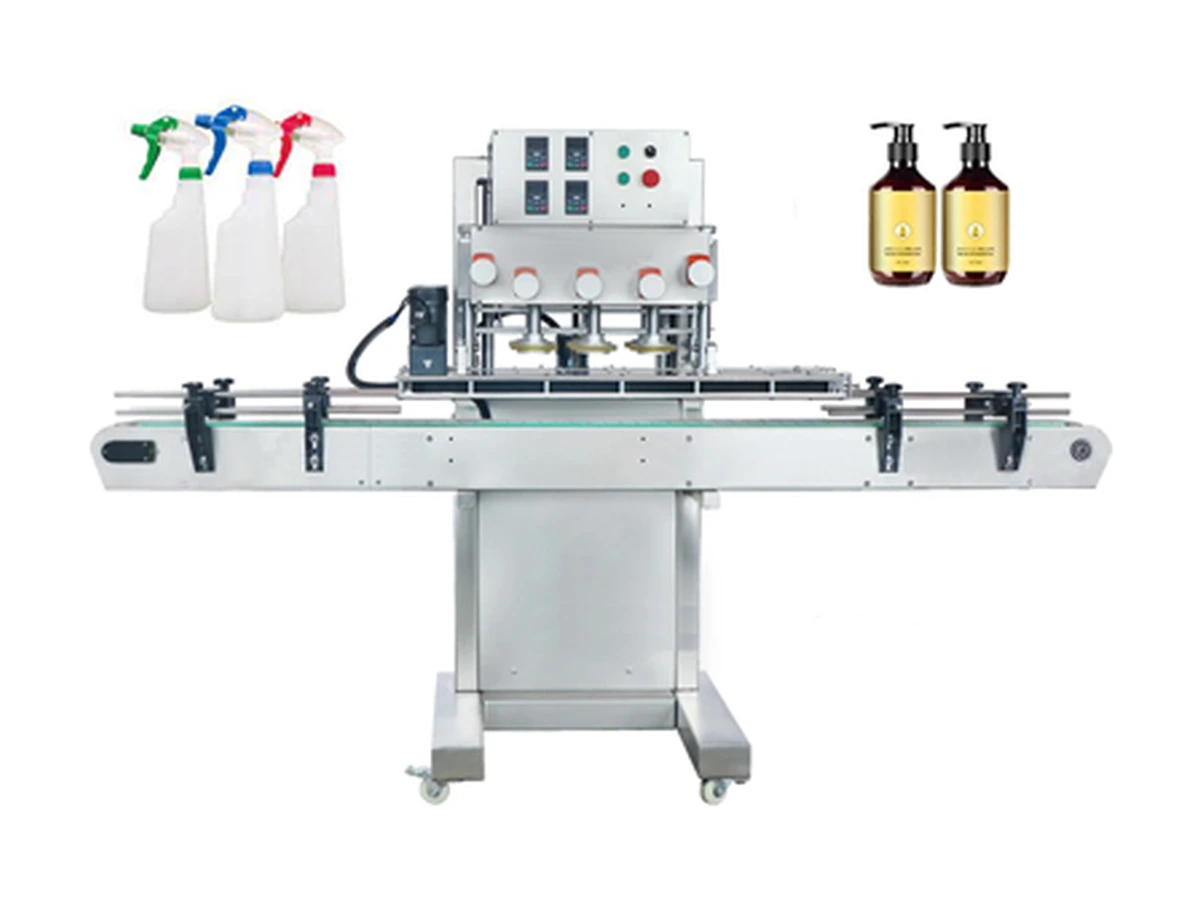
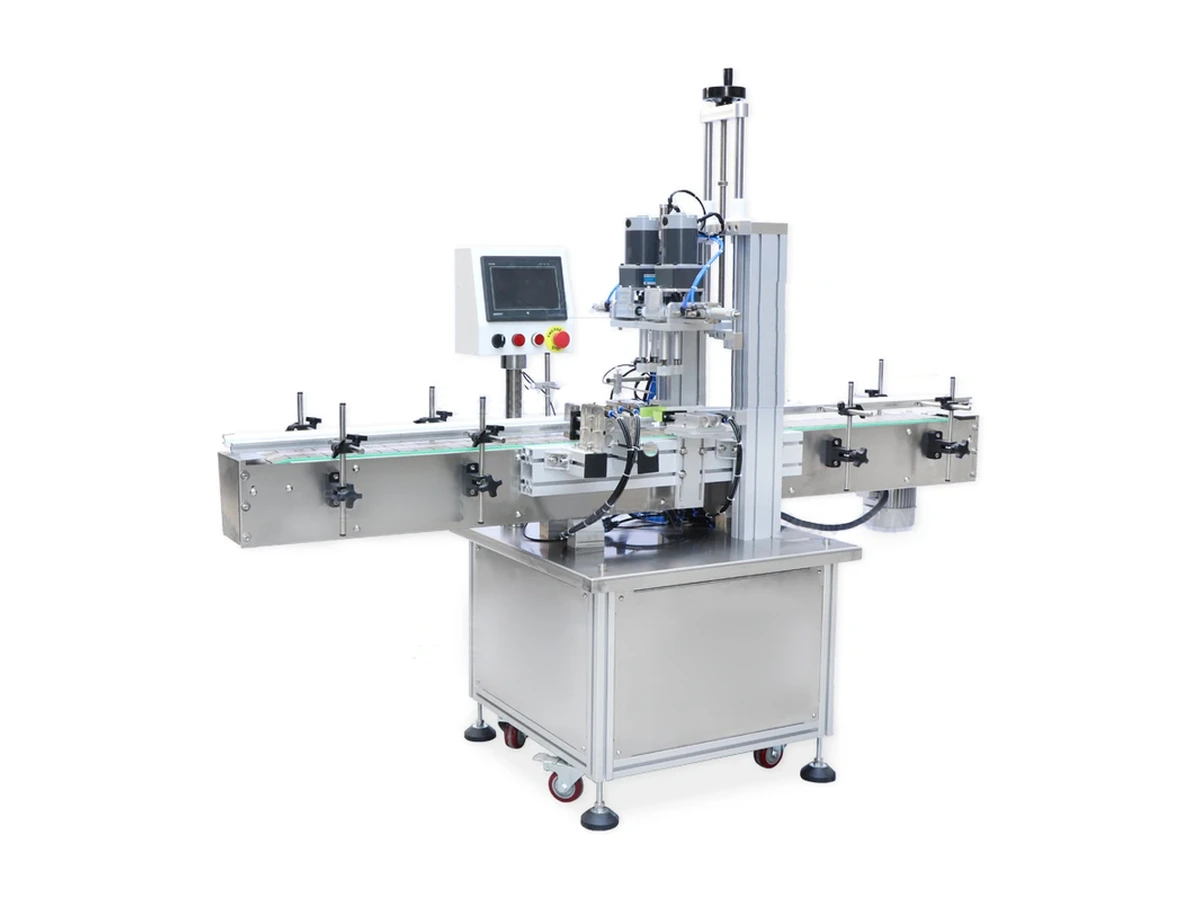
Compare trigger spray cap feeding equipment, automatic trigger cappers, belt spindle cappers, compact machines and semi-automatic screw capping options.

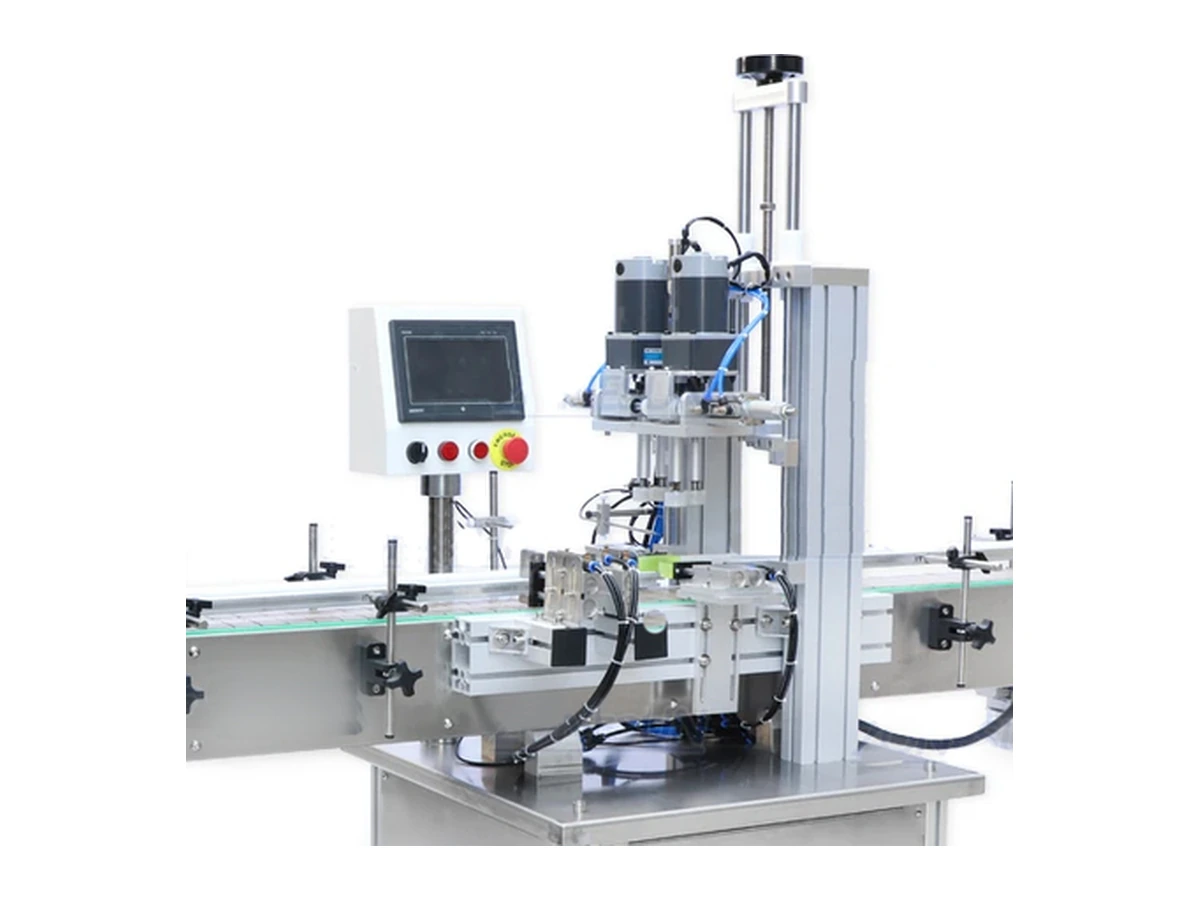
Compact Screw Capping Machine
Compact automatic capping

Compact Screw Capping Machine

Space-saving screw capper for smaller production areas, laboratories and compact lines running sprays or standard screw caps.

Output
Approx. 20–40 bottles/min
Closure
Caps Ø18–70mm
View machine →
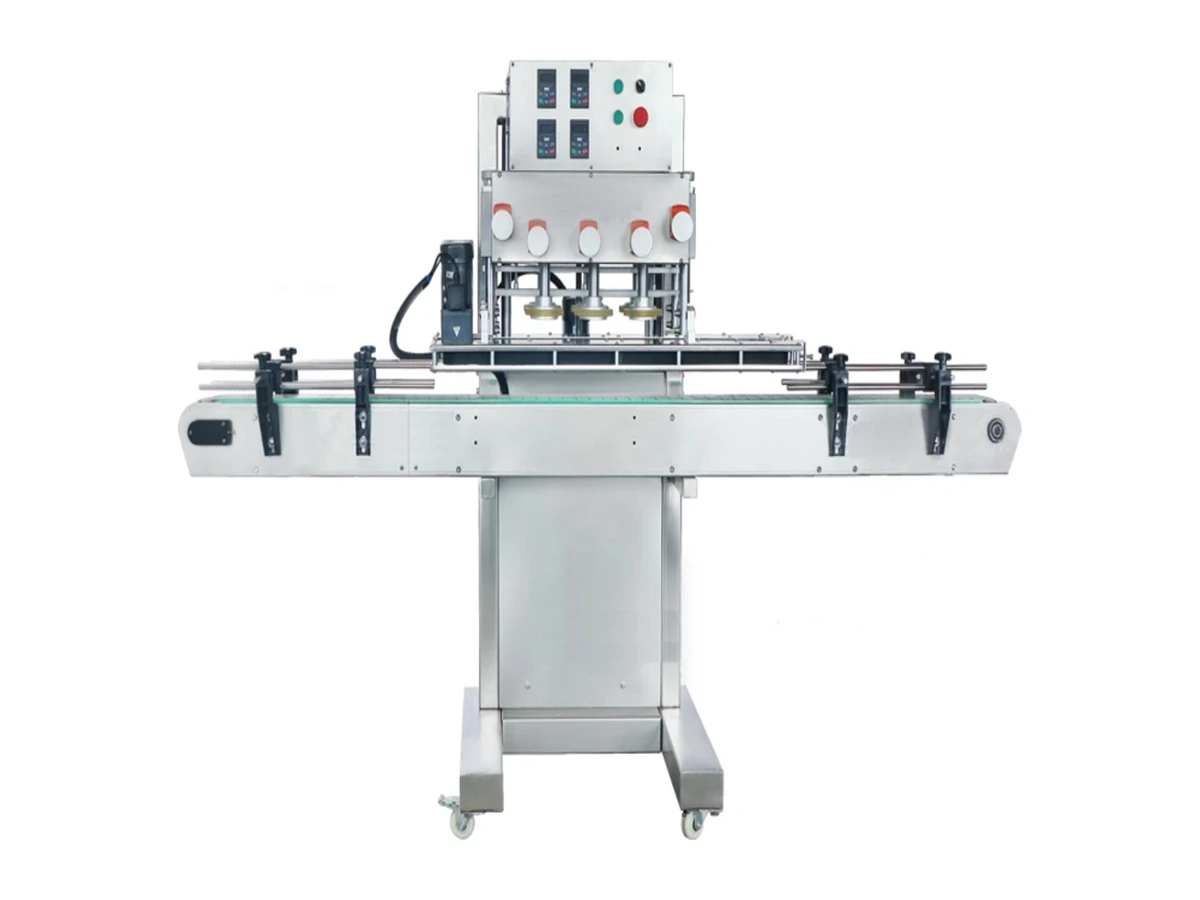
Semi automatic screw capping machine capping head detail
Semi automatic capping

Semi Automatic Screw Capping Machine

Desktop semi-automatic screw capper with automatic bottle clamping, manual/automatic cycling and stable torque control for smaller batches.

Output
20–60 bottles/min format-dependent
Closure
Caps Ø20–60mm, custom up to 90mm
View machine →

High-intent search routes

Find the right trigger capping page faster

These pages target the searches buyers use before requesting a quote, from trigger spray cappers and cap feeders to automatic lines and cleaning-product applications.

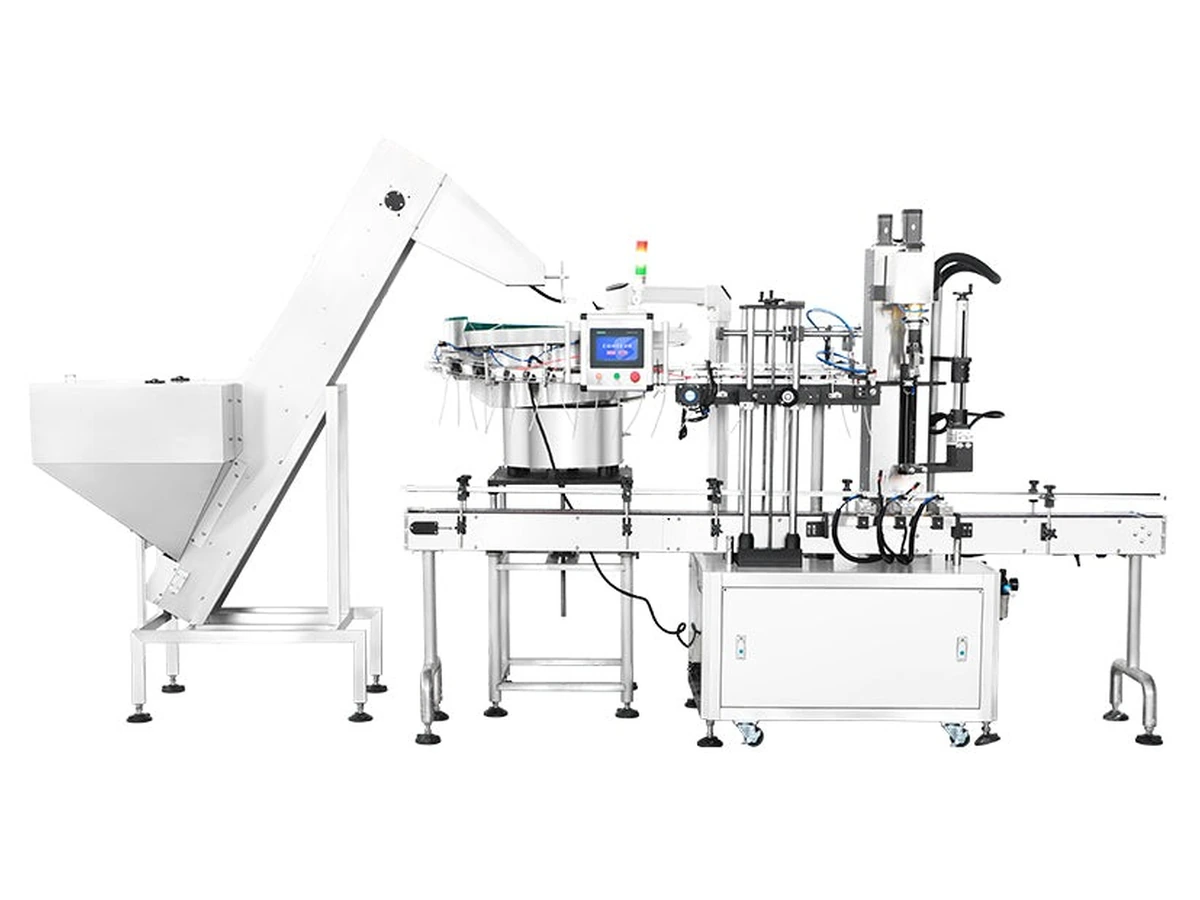
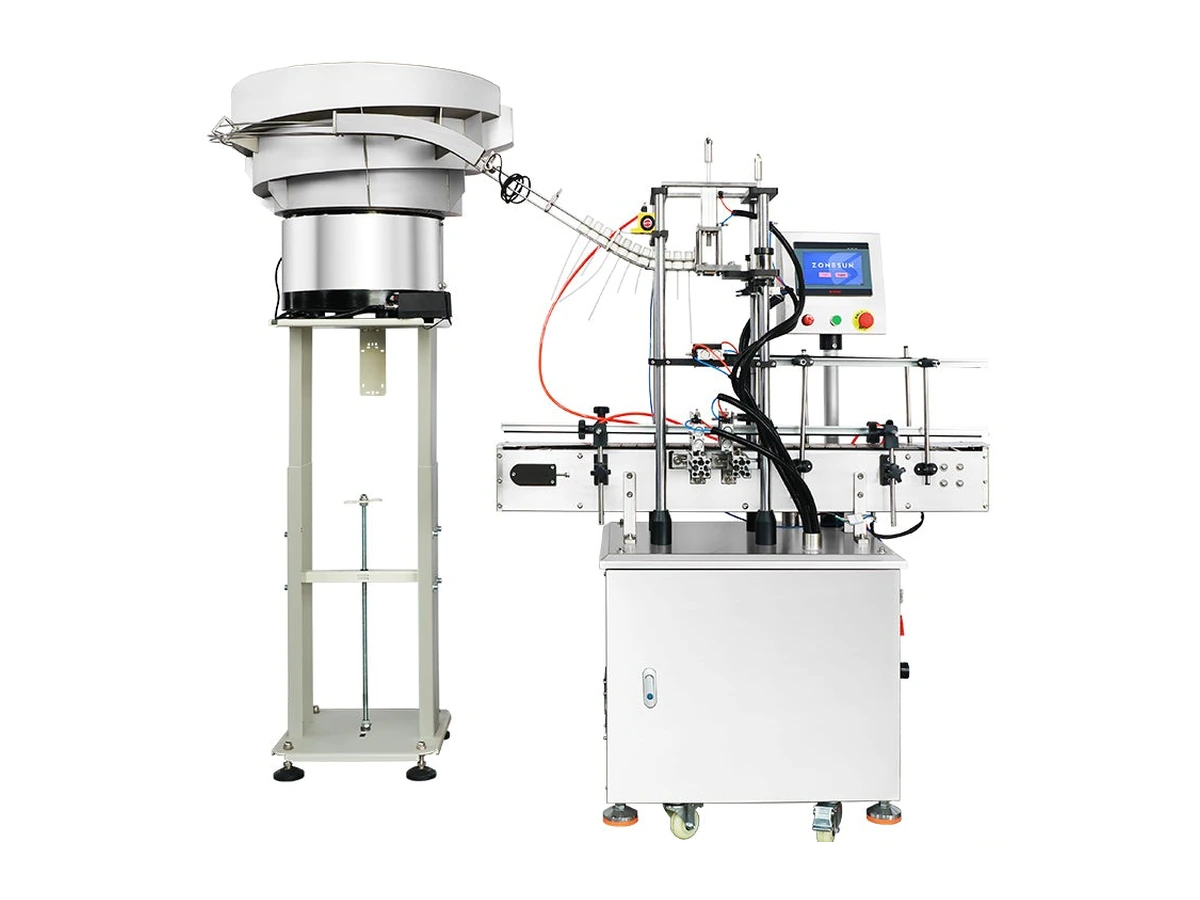
Trigger spray cap feeder with vibratory bowl

Why trigger capping is different

Trigger closures need more than basic torque control

Trigger sprayers create extra handling problems because the closure has an asymmetric body and a dip tube that must be guided into the bottle. A good machine route needs reliable cap orientation, smooth bottle transfer and tooling matched to the real cap sample.

  • Cap feeder and bowl options for orientation and presentation.
  • Gripper or placement tooling to guide the closure and dip tube.
  • Container support so tall or lightweight bottles stay stable.
  • Integration with filling, labelling, coding and conveyors.

A stronger machinery brief

How to specify a trigger capping project accurately

The most useful enquiry is built around the real bottle, closure and production method. These four areas usually determine whether a project needs operator-assisted tightening, automatic cap feeding or a fully integrated trigger capping cell.

Closure and dip-tube geometry

Record the neck finish, cap skirt diameter, trigger body orientation, tube length tolerance, tube stiffness and any transit lock. These details determine whether closures can be bulk-fed and how the tube must be guided into the bottle.

Bottle stability and handling

Confirm bottle material, height, width, centre of gravity, filled weight and sidewall rigidity. Tall or lightweight bottles may need side guides, belts or neck support before placement and torque are applied.

Sustained output, not headline speed

Define the continuous line rate, SKU mix, changeover time and operator tasks. Feeder replenishment, bottle spacing and downstream labelling can reduce sustained output even when the capper can cycle faster.

Closure quality and acceptance

Set measurable checks for cap height, thread engagement, torque window, nozzle orientation, tube damage, leakage and rejects. Representative worst-case samples should be included in machinery trials.

Product and bottleProduct type, bottle material, dimensions, filled weight, neck finish and any unstable or shaped features.
ClosureTrigger or pump model, thread, outer dimensions, nozzle position, lock or clip and supplier drawing where available.
Dip tubeNominal length, tolerance, outside diameter, stiffness, natural curvature and cut-end quality.
Production targetRequired sustained bottles per minute, shift pattern, batch size and expected future growth.
SKU matrixEvery bottle and closure combination, including planned formats and required changeover frequency.
Line interfacesUpstream filler discharge, conveyor height, bottle pitch, downstream labeller and accumulation space.
Quality checksTorque or cap-height limits, cross-thread checks, leak testing, reject handling and traceability needs.
Site and supportPower, air, access, guarding expectations, installation window, operator training and spare-parts plan.

Applications

Built for products commonly packed with trigger sprayers

Use the application route when product type, bottle stability or closure style is the fastest way to narrow down the machine requirement.

Cleaning products

Trigger sprayers for household cleaners, disinfectants, degreasers and multi-purpose sprays.

Cosmetics and care

Pump and spray closure projects where presentation quality and repeatability matter.

Chemicals

Cap handling and closure control for chemical bottles, automotive products and industrial liquids.

Contract packing

Changeover-focused machinery for packers managing multiple bottles and cap formats.

Project support

From samples and specification to commissioning

Lancing UK can help with the equipment shortlist, machine options, installation route, training, spares and ongoing support.

Specification

Review bottle, closure, tube length, output target, line layout and utilities before the quote is finalised.

Integration

Connect capping to filling, conveyors, labelling and coding where a complete bottle line is required.

Aftercare

Support with commissioning, operator handover, spares, format change support and servicing routes.

Ready to specify a trigger capper?

Send your bottle, cap, product, target output and preferred automation level.

Engineering evidence

Specify trigger capping around the complete closure-handling sequence

A reliable project brief covers more than the tightening head. It defines how the closure is supplied, orientated, presented, pre-threaded, tightened, checked and recovered after a normal line stop.

Checks that separate a trigger capper from a generic screw capper

Trigger sprayers combine an asymmetric head with a flexible dip tube. The closure can nest in bulk, rotate during transfer, catch on guides or enter the bottle at an angle. The bottle can also twist or tip while torque is applied. These risks should be reviewed together rather than treated as separate feeder and capper problems.

  • Closure orientation: define the required trigger/nozzle direction at the hand-off point.
  • Dip-tube control: check tube length, curvature, stiffness and entry into every bottle depth.
  • Pre-threading: confirm that the thread starts cleanly before final tightening where the chosen route uses a pre-screw stage.
  • Torque and cap height: agree the measurement method, timing and acceptance window before trials.
  • Bottle stabilisation: test the filled bottle at production weight, including the least stable format.
  • Buffer and recovery: prove feeder replenishment, short stops, restart and safe jam clearance.
Reference routeVerified source reference
Automatic trigger sprayer capper1,200 BPH reference capacity; final accepted output must be confirmed with the actual bottle, closure, dip tube, feed method and quality criteria.
LU-XG446S trigger cap feeder20–25 BPM reference working capacity; approximate cap range Ø15–35 mm and bottle height 10–280 mm, subject to sample trials.
LU-XG440B belt spindle capper3,000–5,000 BPH reference capacity for compatible bottle and screw-cap formats with stable supply and continuous transfer.
LU-XG16 automatic screw capper20–60 bottles/min reference range for compatible caps and bottles; the feed route and format determine accepted output.
LU-XG1870 class compact capperApproximately 20–40 bottles/min reference range, subject to format, operator input and line arrangement.
LU-XG6100 semi-automatic capper20–60 bottles/min reference mechanical range; real production output is operator-, cap-placement- and format-dependent.

Reference rates are not universal guarantees. A quotation should state the bottle, closure, operator or feeder arrangement, replenishment method, run duration and accepted-quality definition used for the final rate.

Sample set

Supply every bottle and closure combination, including the longest or most curved dip tube, the lightest bottle and normal production tolerances. Filled-weight samples are important where bottle stability changes after filling.

Trial evidence

Record accepted output, misorientation, cross-threading, cap-height variation, torque results, tube damage, feeder interruptions and recovery after planned stops. Record the test method as well as the result.

Changeover evidence

List guide, gripper, chuck, wheel, recipe and feeder adjustments for each format. A first-off approval check should confirm tube entry, thread engagement, cap height and torque before production restarts.

Buyer questions

Trigger capping specification questions

These answers explain the evidence needed before a reference machine or speed can be treated as suitable for a production pack.

What samples are needed for a trigger capper trial?

Provide production bottles, trigger closures, dip tubes and normal tolerance variation for every required format. Include filled-weight samples where product weight affects bottle stability.

Why is a published speed not a guaranteed production rate?

Accepted output depends on closure orientation, tube behaviour, bottle control, replenishment, operator duties, changeovers and the agreed reject criteria. Those conditions must be stated with the final rate.

How should torque and cap height be checked?

Agree a repeatable measurement method, calibrated equipment, sample timing and acceptance window. Test after the same settling period and from the same bottle and cap reference points.

When is automatic trigger cap feeding justified?

Automatic feeding becomes relevant when manual placement cannot sustain the target output or consistency. The trigger shape, tube behaviour and required orientation must still be proved by trial.

What should happen after a feeder or capper jam?

The machine should stop safely, identify the affected area and allow controlled clearance. Restart checks should confirm that no damaged or misorientated closure remains in the transfer path.

Can trigger capping connect to filling and labelling equipment?

Yes. Conveyor height, bottle spacing, buffer capacity, ready/fault signals and line-stop behaviour should be agreed so filling, capping and labelling operate as one controlled line.

Technical resource library

Prepare a trigger capping project for specification, testing and handover

These resources cover the evidence needed after the first machine shortlist: acceptance conditions, pack-quality checks, controls, operator handover and safe use.

Use the same evidence from enquiry to production

Start with production-intent bottles, trigger closures and dip tubes. Carry the same format identity, quality methods, line-state definitions and open actions through quotation, sample trials, FAT, installation, SAT, operator training and normal production. That continuity makes reference output figures more useful because the conditions behind the result are visible.

More buyer questions

Questions that define the right trigger capping route

These answers connect the pack, machinery scope and trial evidence before a quotation is prepared.

Can one trigger capping machine run both trigger sprayers and pumps?

One machine may handle more than one closure family when bottle, thread, closure-body, dip-tube and tightening requirements are compatible and the correct change parts or settings are available. Do not assume compatibility from cap diameter alone; include every proposed trigger and pump format in the sample and changeover review.

What information determines whether automatic cap feeding is practical?

Automatic feeding depends on trigger-body geometry, a repeatable orientation feature, dip-tube length and stiffness, component condition, required direction, format range and line demand. Lancing needs physical closures and tubes, plus drawings where available, to confirm that feeding and hand-off can be engineered reliably.

Can a trigger capper be added without replacing the whole packaging line?

Often the capping stage can be integrated into an existing line, provided bottle transfer, available footprint, conveyor height, controls, guarding, accumulation and upstream/downstream signals are reviewed. The project should define responsibility for each interface and how affected bottles are controlled during stops and restarts.

Which packs should be retained after a trigger capper trial?

Retain approved first-off packs, representative packs from the sustained run, rejected packs by failure type, and packs from stops, adjustments and restart. Label each sample with the bottle, closure, run condition and inspection result so the evidence can be traced to the exact test case.

Engineering evidence

Build the decision from component compatibility to recorded production

Reliable trigger capping starts before the machine is selected and continues after commissioning. These resources help define the pack, plan a representative trial, control incoming components and retain the production evidence needed to investigate faults or confirm a stable process.

Check bottle and closure compatibility

Record the bottle neck finish, trigger body, dip tube, filled weight, orientation requirement and acceptable contact areas before deciding how the pack should be fed, placed and tightened.

Open the compatibility guide →

Plan a representative sample trial

Use a format matrix that includes the easiest, typical and most difficult bottle-and-trigger combinations, plus replenishment, stops, recovery, changeover and finished-pack checks.

Build a sample trial matrix →

Control incoming bottles and closures

Separate component variation from machine variation by checking identity, neck finish, moulding condition, dip-tube length and tube damage when a new lot or supplier is introduced.

Review incoming quality checks →

Record the production run

Link bottle and closure lots, machine settings, line states, interventions, rejects and finished-pack checks so a future investigation can reconstruct what happened.

Use the production run log guide →

What makes a trigger closure and bottle machine-ready?

A trigger closure and bottle are machine-ready only when the physical interfaces have been defined and tested together. That includes the neck finish, cap thread, trigger-body geometry, dip-tube length and condition, bottle stability at production fill weight, required nozzle direction and the contact areas that tooling may use without damaging the pack.

Why separate component variation from machine variation?

Separating component and machine variation prevents repeated setting changes from masking a bottle or closure problem. If a new component lot introduces different thread, moulding or dip-tube behaviour, the change should be identified before settings are altered. Retaining approved samples and lot details makes that comparison possible.

What makes a trigger capping trial representative?

A representative trigger capping trial includes production-intent bottles and closures, realistic fill condition, normal loading and replenishment, expected short stops, at least one controlled recovery and every agreed format change. The result should be based on accepted finished packs, not on empty mechanical cycles or the easiest sample only.

Why record trigger capping line states as well as output?

Accepted output can only be interpreted when the operating state is known. A run log should distinguish normal running from starvation, downstream blockage, planned replenishment, inspection, faults and recovery. This shows whether lost production came from the capper, feeder, conveyor, component supply or another line stage.

New technical guidance

Measure finished-pack quality and line performance more clearly

Use these guides to define torque, leak checks, OEE, line clearance and feeder-jam evidence before trials, acceptance or production improvement work.

Quality guide

Trigger cap torque testing

Separate application settings, removal torque, cap height, thread engagement and functional pack evidence.

Changeover

Cleaning and line clearance

Plan safe isolation, component clearance, cleaning boundaries and first-off approval between formats.

Call now01494 623015