Best used when
The bottle, cap and output target fit this machine route better than a generic capper or a fully bespoke line.

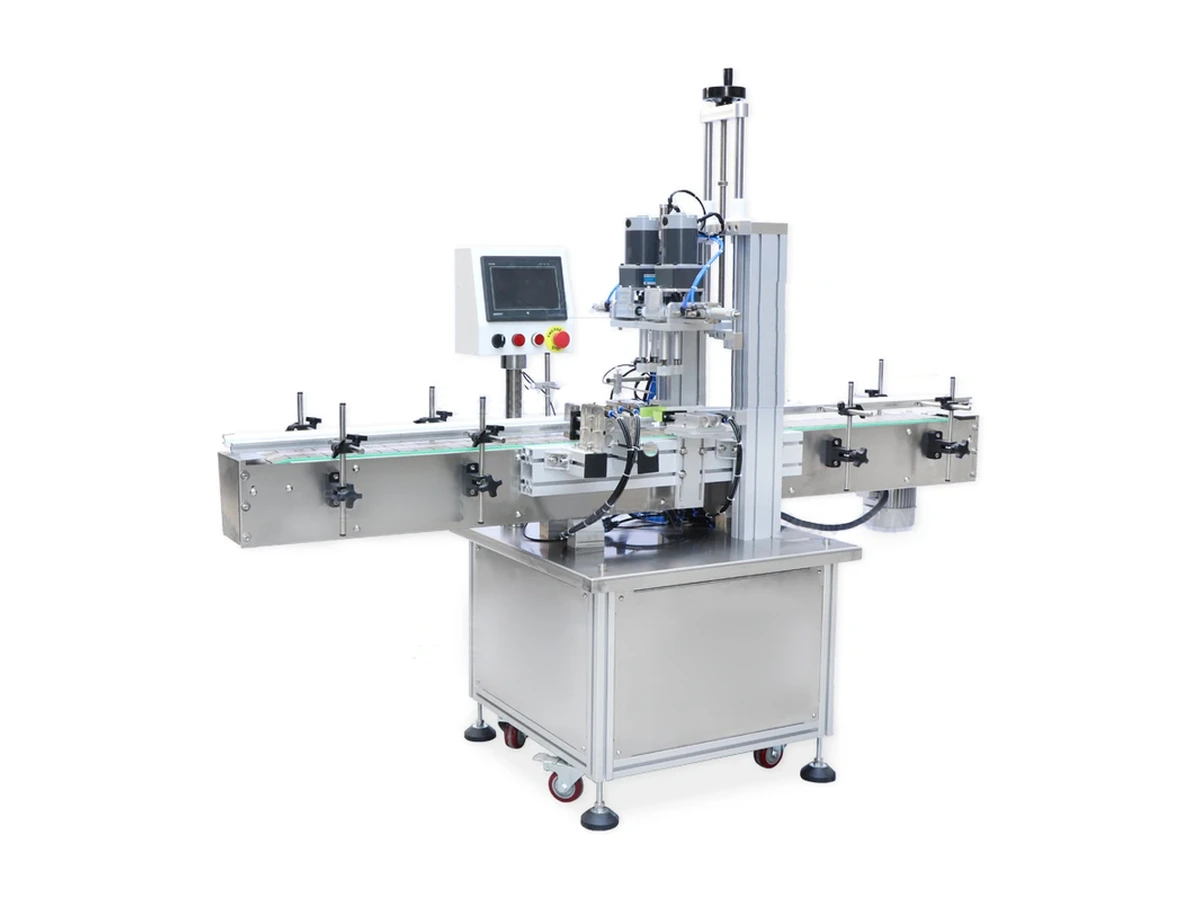
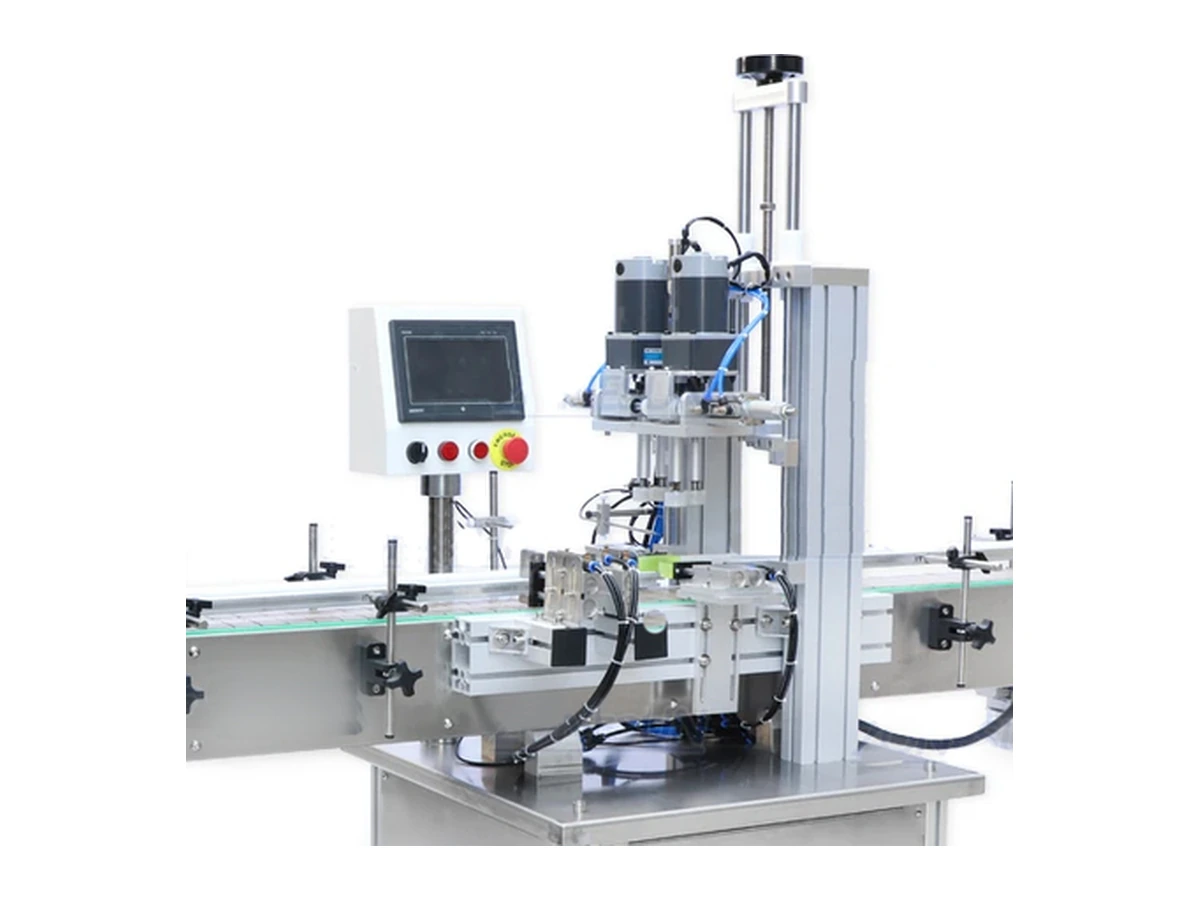
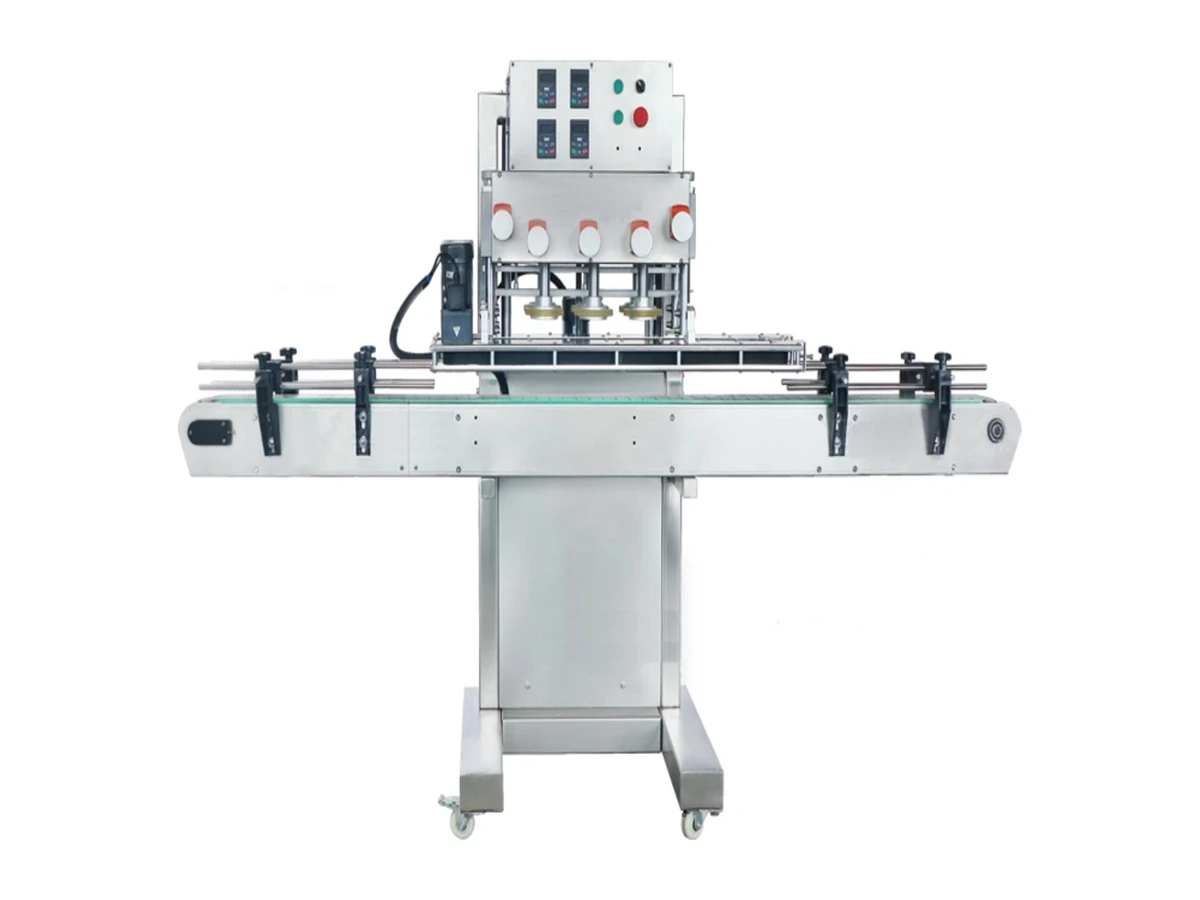
Pneumatic inline screw capping machine for spray, pump and screw-cap bottles with adjustable fixtures and repeatable torque control.
Machine intent
This page is focused on automatic screw capping where the closure is placed or presented ready for tightening. It is useful for spray, pump and screw-cap bottles that need repeatable torque and controlled bottle support.
The bottle, cap and output target fit this machine route better than a generic capper or a fully bespoke line.
Send cap samples, bottle samples, closure dimensions, tube length where relevant and the target output so tooling and configuration can be checked.
Use the quote form or call Lancing to compare this machine against the other trigger capping and spray bottle capping options.
Machine overview
Pneumatic inline screw capping machine for spray, pump and screw-cap bottles with adjustable fixtures and repeatable torque control.
Applications
This machine is normally considered where the closure family, output target and container format need a practical balance between automation, operator involvement and changeover flexibility.
Specifications
Final machine configuration, guarding, conveyor height and options should be confirmed against your actual bottle and cap samples.
| Reference model | LU-XG16 |
|---|---|
| Working voltage | AC 220/110V, 50–60Hz |
| Bottle height | 30–300mm |
| Cap diameter | 18–70mm |
| Bottle diameter | 20–160mm |
| Working speed | 20–60 bottles/min |
| Working pressure | 0.4–0.6MPa |
| Machine weight | Approx. 150kg |
Before quotation
Better samples and project data reduce guesswork and make the first proposal more accurate.
Send photos, drawings or physical samples showing cap diameter, closure style, thread and dip-tube length where relevant.
Confirm target bottles per minute or bottles per hour, plus whether the line is manually loaded or fully automatic.
Confirm available footprint, conveyor height, upstream filling equipment and downstream labelling or packing stages.
Related machines
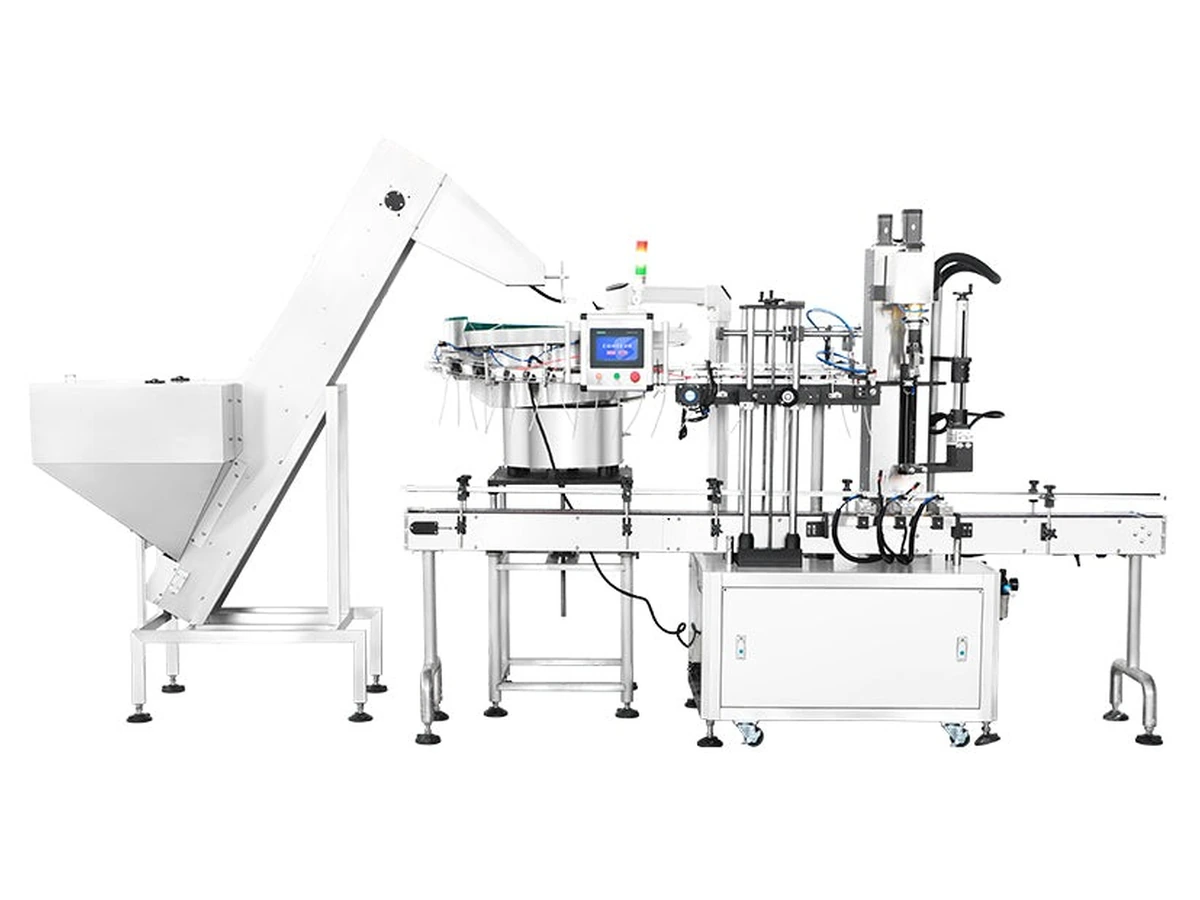
Automatic trigger-sprayer capping system for cleaning, care and chemical bottles requiring stable cap presentation and repeatable closure control.
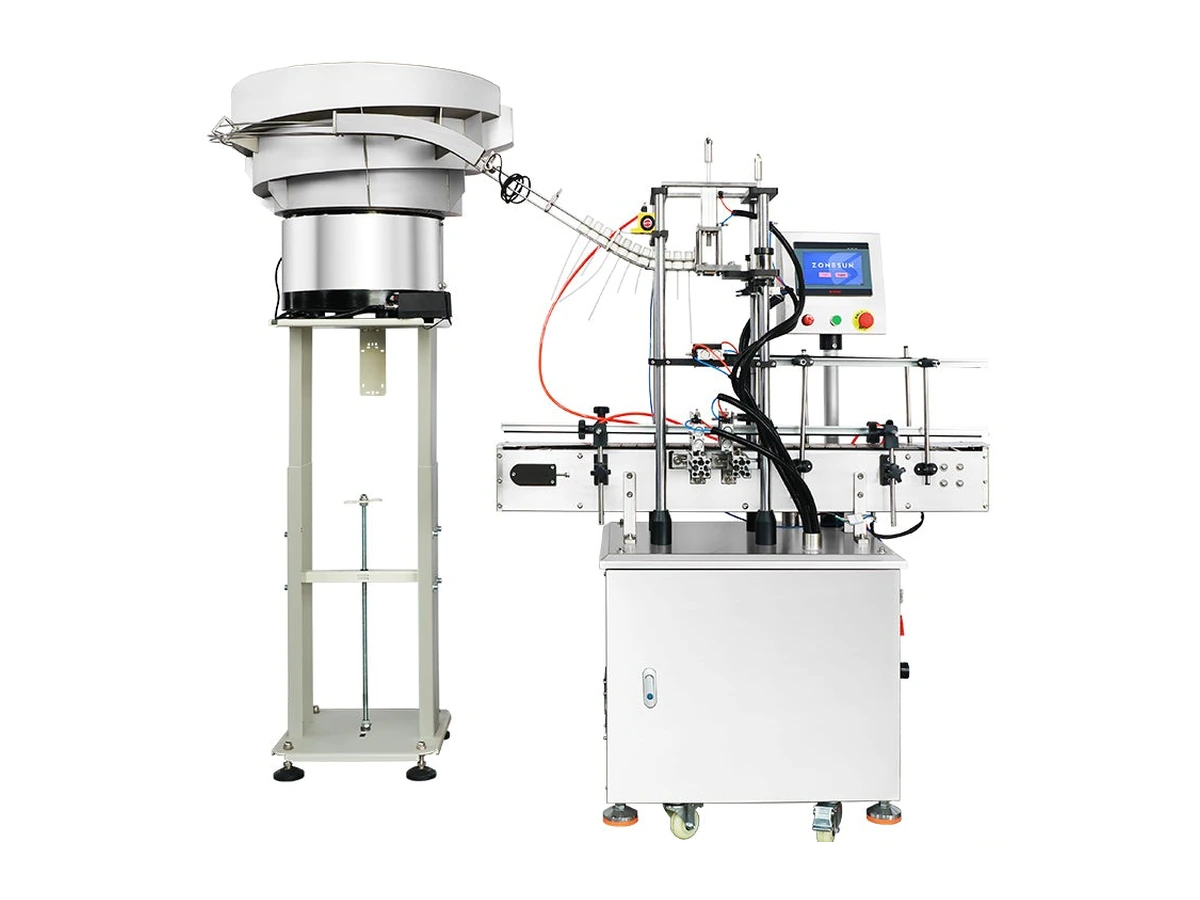
Vibratory bowl trigger-spray cap feeding and placement equipment for bottles with soft dip tubes and awkward trigger closure geometry.
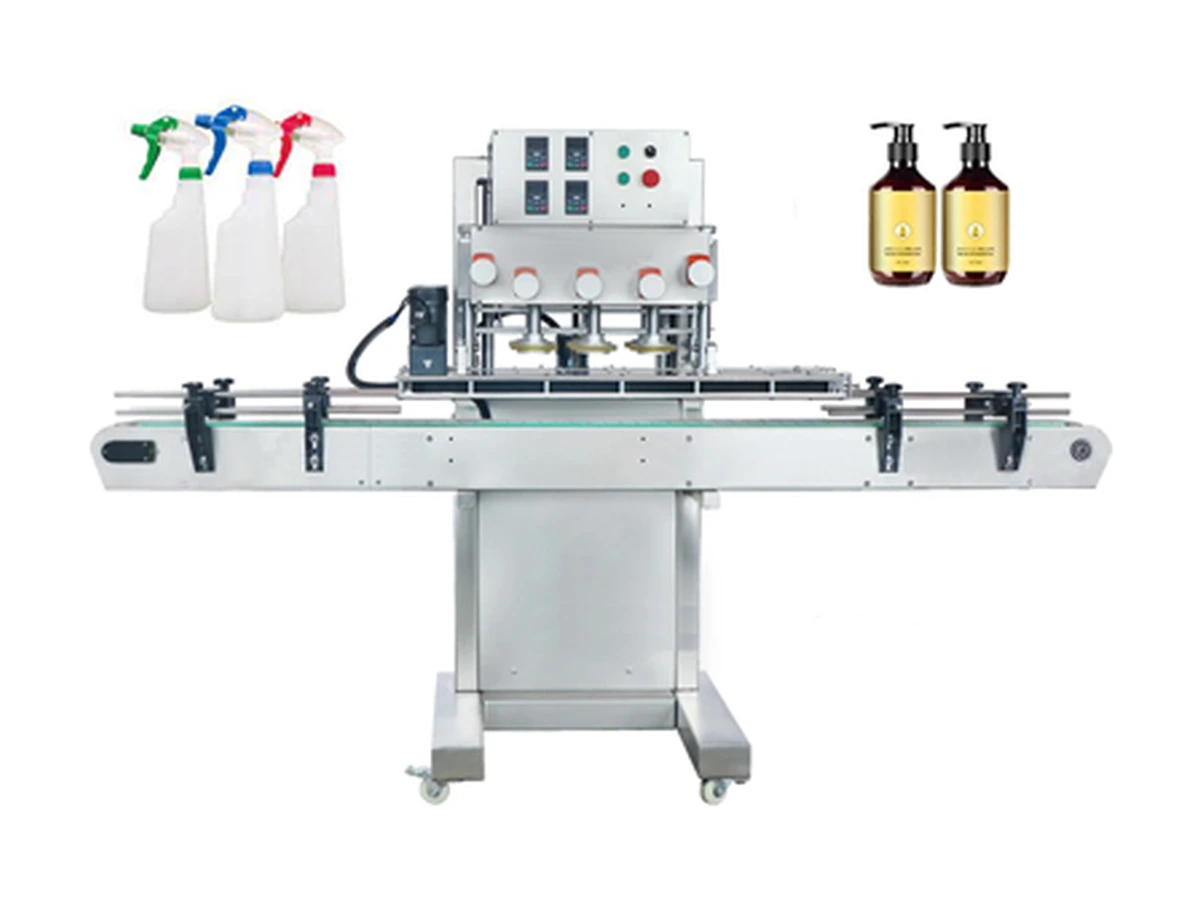
High-speed inline belt/spindle screw capper for round plastic bottles, with guided side-belt transport and cap feeding options.
Space-saving screw capper for smaller production areas, laboratories and compact lines running sprays or standard screw caps.
Desktop semi-automatic screw capper with automatic bottle clamping, manual/automatic cycling and stable torque control for smaller batches.
Send bottle, cap, closure sample and output target to Lancing UK.
Inline configuration
The 20–60 bottles/min reference range covers compatible formats within the stated dimensional ranges. The sustained accepted rate depends on how caps are presented, how bottles are clamped or guided and how quickly the thread starts without rework.
| Configuration item | Why it matters | Evidence to provide or record |
|---|---|---|
| Cap placement height | A cap placed too high or at an angle may not engage before tightening. | Cap and bottle drawings, physical samples and a fixed cap-height inspection method. |
| Thread start | Pumps and triggers can rotate or lean before the thread is engaged. | Clean engagement across the required closure and neck-finish tolerance range. |
| Bottle clamp/guides | The bottle must resist torque without tipping, twisting or crushing. | Filled-weight samples, least-stable format and approved contact areas. |
| Air and controls | The listed 0.4–0.6 MPa reference pressure and line controls must match the site. | Available pressure/flow, electrical supply, ready/fault signals and stop logic. |
| Torque and cosmetic quality | Tightening must secure the cap without damage or unacceptable marking. | Project-specific torque method, appearance standard and inspection frequency. |
| Line balance | Cap placement and tightening cannot exceed feeder or downstream capacity. | Upstream fill rate, cap supply, bottle pitch, accumulation and downstream demand. |
Inline capper questions
The rate is format-dependent and must be checked with the cap-presentation method, bottle stability, thread engagement, operator duties and accepted-quality criteria.
Potentially, subject to placement, tube handling, orientation, tooling and thread-start trials. A dedicated feeder or trigger placement system may still be required.
It can indicate whether the closure is fully seated and threaded. Use a fixed bottle and closure reference and measure after the same settling period.
Test the smallest, largest, lightest, tallest and least stable formats at the production fill condition, plus normal neck and cap variation.
Confirm that bottles and caps already in the machine are identified, cleared or rechecked and that the first packs after restart meet the agreed quality criteria.
Yes, subject to conveyor height, bottle pitch, cap supply, controls and the agreed interfaces with filling, labelling, coding or accumulation equipment.