Tube-entry challenge
Include the longest, softest or most naturally curved dip tube and the bottle opening most likely to catch it. Record tube-end condition before and after feeding.

Acceptance testing
Define representative samples, operating conditions, quality checks and recovery tests before accepting a trigger capping machine.
Acceptance planning
A useful factory acceptance test and site acceptance test should prove the agreed duty rather than only show that the machine moves. For trigger closures, the test plan needs to identify the bottle, trigger body, dip tube, neck finish, filled weight, feed method, operator tasks and quality rules used for every result.
The factory test can verify the built machine, controls, tooling, changeover and representative pack handling before dispatch. The site test then confirms installation, utilities, line interfaces, production materials, operator handover and recovery in the real environment. Neither stage should rely on a speed figure without stating the conditions behind it.
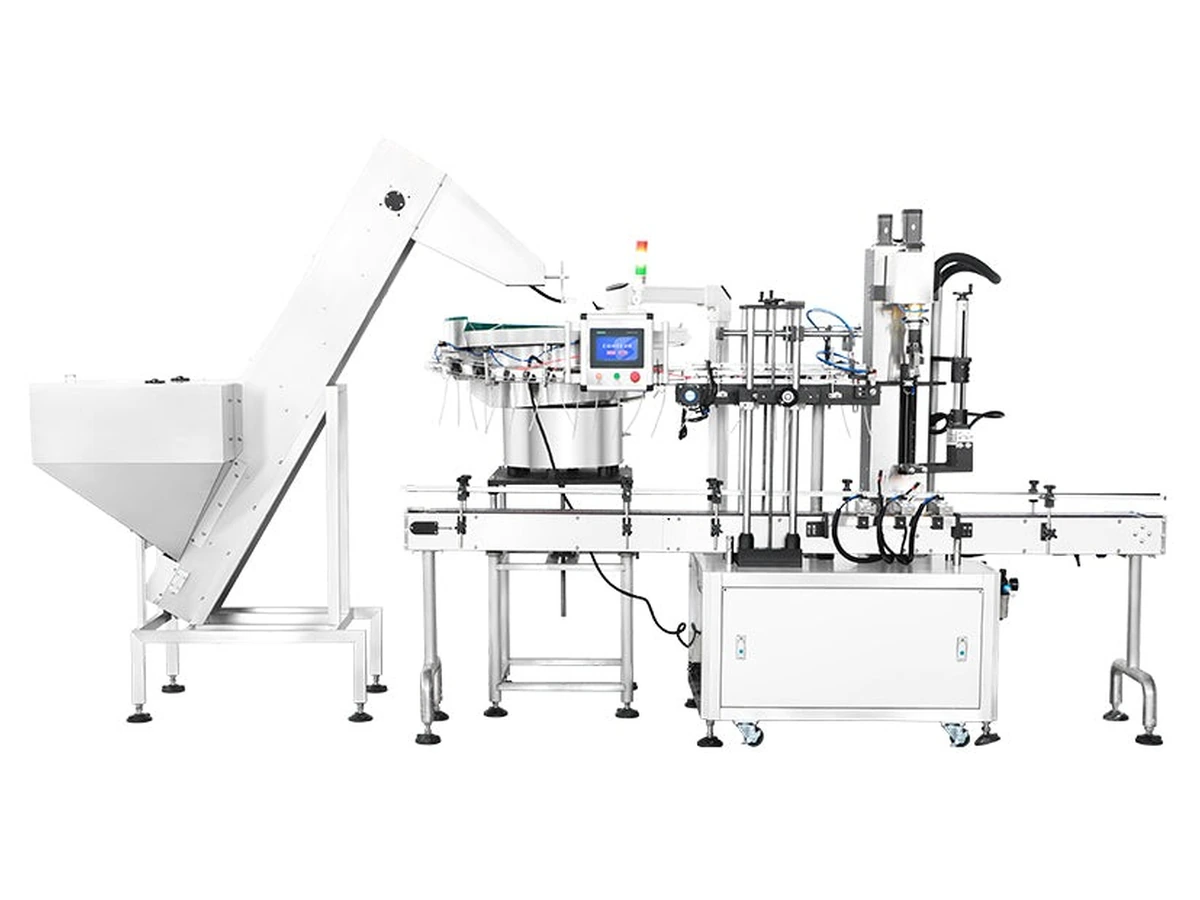
FAT and SAT matrix
The same requirement may be checked at both stages, but the operating environment and evidence are different.
| Acceptance subject | Factory acceptance evidence | Site acceptance evidence |
|---|---|---|
| Approved formats | Run the agreed reference bottle and the approved extremes that materially change tube entry, bottle support or closure handling. | Confirm the delivered tooling and settings against production bottles, triggers, product condition and normal component supply. |
| Closure feeding | Record bulk loading, orientation, recirculation, tube condition, buffer level and hand-off to the placement station. | Confirm replenishment access, operator workload, site storage, line-demand signals and response to short stops. |
| Placement and pre-threading | Check tube entry, cap centring, seating and clean thread start across representative component variation. | Repeat with site conveyors, filled-weight bottles and normal upstream bottle spacing. |
| Tightening quality | Use the agreed torque or closure-quality method, cap-height reference points and appearance standard. | Confirm the same method, instrument, sample timing and acceptance window with site quality personnel. |
| Accepted output | State run duration, feeder arrangement, operator duties, planned checks, rejected packs and treatment of stops. | Measure saleable output while the connected line performs normal filling, conveying, inspection and downstream work. |
| Fault and recovery | Demonstrate safe stops, affected-pack identification, controlled clearance and first-good-pack approval after restart. | Confirm line-wide stop logic, isolation boundaries, access, communications and the disposition of bottles held between machines. |
| Changeover | Record parts, tools, settings, recipes, checks and time to a stable approved run for the selected formats. | Repeat with the site team and confirm storage, identification, cleaning and first-off release arrangements. |
| Documentation and training | Review manuals, drawings, settings sheets, spare-parts information and outstanding actions. | Record operator, setter and maintenance handover using the installed machine and agreed safe working procedures. |
Representative samples
Testing every possible combination is not always practical. Select the formats that challenge different parts of the process and record which combinations were not run.
Include the longest, softest or most naturally curved dip tube and the bottle opening most likely to catch it. Record tube-end condition before and after feeding.
Include the lightest, tallest, narrowest or most flexible filled bottle. Confirm guide and clamp contact without unacceptable distortion or marking.
Include trigger bodies with asymmetric actuators, shipping clips or nozzle direction requirements that change the feeder and hand-off rule.
Include the closure and neck-finish combination most sensitive to cocking, cross-threading or incomplete seating.
Choose formats that require different guides, grippers, heights, wheels, chucks or recipes so the full change procedure is exercised.
Use the bottle pitch and upstream/downstream conditions most likely to starve or block the capping stage.
Evidence record
Video can support a witness record, but it should be linked to the approved test case and measurable result.
Record requirement revision, machine configuration, sample identifiers, product or filled weight, operator roles, instruments, acceptance limits and planned run states.
Record start and finish times, accepted quantity, rejects by reason, stops, replenishment, adjustments, alarms, recovery actions and samples retained for review.
Confirm cap height, torque or agreed closure test, tube condition, thread engagement, cosmetic quality and disposition of every affected pack.
List deviations and open actions with an owner, due point and evidence required. Separate items that block dispatch or production from observations that do not.
Use the trigger capping quality inspection guide to define pack checks, the controls and sensor guide to define line states, and the installation and commissioning page to prepare the site.
Buyer questions
It can demonstrate an agreed reference duty under stated factory conditions. Final accepted site output still depends on production components, utilities, connected machinery, operator work and the agreed quality definition.
Yes when replenishment is part of normal production. A short run with a full buffer can hide operator workload, nesting, tube tangling or starvation risk.
Empty bottles can support setup checks, but filled-weight samples are normally more representative for stability, guide contact and conveyor behaviour.
List them explicitly and record the engineering basis for approval, the remaining risk and any site test required before release.
Video is useful for motion, sequence and witness context. It should not replace agreed output, defect, cap-height, torque or recovery records unless that has been accepted in advance.
Include the people responsible for production, quality, engineering and safe operation where their acceptance responsibilities are affected.
Send the bottle, closure, dip tube, format range, line interfaces and quality checks so the machinery scope and trial conditions can be reviewed.
Acceptance stages
Each stage answers a different question. Combining them into one informal demonstration can leave important interfaces, site conditions or routine controls unverified.
| Stage | Primary question | Typical evidence |
|---|---|---|
| Sample trial | Can the proposed machinery route handle the representative bottle, trigger and dip-tube formats? | Trial matrix, samples, settings, observed limitations and provisional finished-pack checks. |
| Factory acceptance test | Does the built system meet the agreed supplier-site scope before dispatch? | Approved protocol, witnessed sequence, results, open actions and retained samples. |
| Site acceptance test | Does the installed system operate with site utilities, connected equipment, materials flow and trained personnel? | Installation checks, connected-line states, site samples, faults/recovery and signed actions. |
| Production release | Is routine production controlled with approved settings, incoming components, operators, inspection and support records? | First-off approval, run log, component lots, quality checks, training and escalation route. |
No. Site acceptance demonstrates the installed system against an agreed test. Production release also depends on approved materials, current settings, trained roles, routine inspection, traceability and the site’s operating controls. Those conditions must remain controlled after the acceptance team leaves.
Test the agreed machine-level fault and recovery functions at FAT, then confirm site-specific interaction at SAT. Connected conveyors, fillers, labellers, accumulation, utilities and local procedures can change how a stop is detected, how affected packs are contained and how the line restarts.
Carry forward the approved format identities, known risks, tooling assumptions, settings revision, finished-pack checks, retained samples and any unresolved conditions. FAT should verify the supplied machine against those defined requirements rather than repeating an undocumented demonstration.
Start a controlled production run log that identifies formats, component lots, settings, line states, inspections, rejects, faults and recovery. It provides the evidence needed to confirm stable production and investigate later changes without relying on memory.
Prepare the sample trial matrix before formal acceptance and use the production run log after the system enters routine use.